

A booklet is one of the most versatile and effective tools for sharing information in a structured and visually appealing way. Whether used for marketing, education, or branding, it helps present detailed content in a compact format. Businesses, educators, and designers rely on booklets to communicate ideas clearly while maintaining professional presentation standards.
Understanding how to create a booklet that stands out requires more than just putting pages together. It involves thoughtful planning, smart design, and the right printing choices. This guide breaks down everything you need to know, from concept to final production, so you can create a booklet that truly delivers value.
What Is a Booklet?
A booklet is a small, bound publication that typically contains multiple pages organized into a clear structure. It is often used to present detailed information in a way that is easy to read and visually engaging. Unlike single-page materials, a booklet allows for deeper storytelling and structured communication.
Booklets come in many forms depending on their purpose. Some are used for product catalogs, while others serve as instruction manuals or event programs. Their flexibility makes them ideal for both personal and professional use across industries.
Definition and Purpose
The main purpose of a booklet is to organize information in a compact and accessible format. It helps guide the reader through content step by step, making it easier to understand complex topics. This makes booklets especially useful for education, marketing, and training materials.
A well-designed booklet also enhances credibility. When information is presented neatly with proper layout and design, it creates a strong impression. This is why many businesses invest in high-quality booklet design to strengthen their brand identity.
Common Types of Booklets
There are several types of booklets, each serving a specific purpose. Choosing the right type depends on your goals and audience.
- Informational booklets
- Product catalogs
- Instruction manuals
- Event programs
- Training guides
Each type follows a different structure, but all focus on clarity and usability. Selecting the right format ensures your message is delivered effectively.
Key Elements of an Effective Booklet
Creating an effective booklet requires attention to both content and design. The goal is to make the information easy to read while keeping the layout visually appealing. A balance between text and visuals is essential for engagement.
Every element, from fonts to spacing, plays a role in how the reader interacts with the booklet. Poor design can make even great content difficult to understand, so it is important to focus on both aspects equally.
Layout and Structure
A clear layout is the foundation of any successful booklet. Content should flow logically from one section to the next. This helps readers follow along without confusion or frustration.
Use consistent margins, spacing, and alignment throughout the booklet. Headings should stand out, and sections should be easy to identify. A well-structured booklet improves readability and keeps readers engaged from start to finish.
Typography and Colors
Typography affects how easily your content can be read. Choose fonts that are clean and professional. Avoid using too many font styles, as this can make the booklet look cluttered.
Colors should align with your brand or purpose. Use a limited color palette to maintain consistency. Proper contrast between text and background ensures readability, especially for printed booklets.
How to Design a Booklet Step by Step
Designing a booklet involves several steps that ensure the final result is both functional and visually appealing. Skipping any step can lead to issues in layout or printing, so it is important to follow a structured process.
By breaking the process into stages, you can focus on each aspect carefully and produce a high-quality booklet that meets your goals.
Planning Content
Start by defining the purpose of your booklet. Identify your target audience and decide what information you want to include. Organize the content into sections to create a logical flow.
Create a simple outline before designing. This helps you visualize the structure and ensures nothing important is missed. Good planning saves time and reduces errors later in the process.
Creating the Layout
Once your content is ready, move on to designing the layout. Use design software to arrange text, images, and headings. Focus on balance and readability throughout the pages.
Include visuals such as images or icons to break up large blocks of text. This makes the booklet more engaging and easier to read. Consistency in design elements is key to a professional look.
Finalizing for Print
Before printing, review your booklet carefully. Check for errors in text, alignment, and formatting. Ensure all images are high resolution to avoid quality issues.
Export the file in the correct format required by your printer. This step ensures that your booklet prints exactly as intended without unexpected changes.
Booklet Printing Options Explained
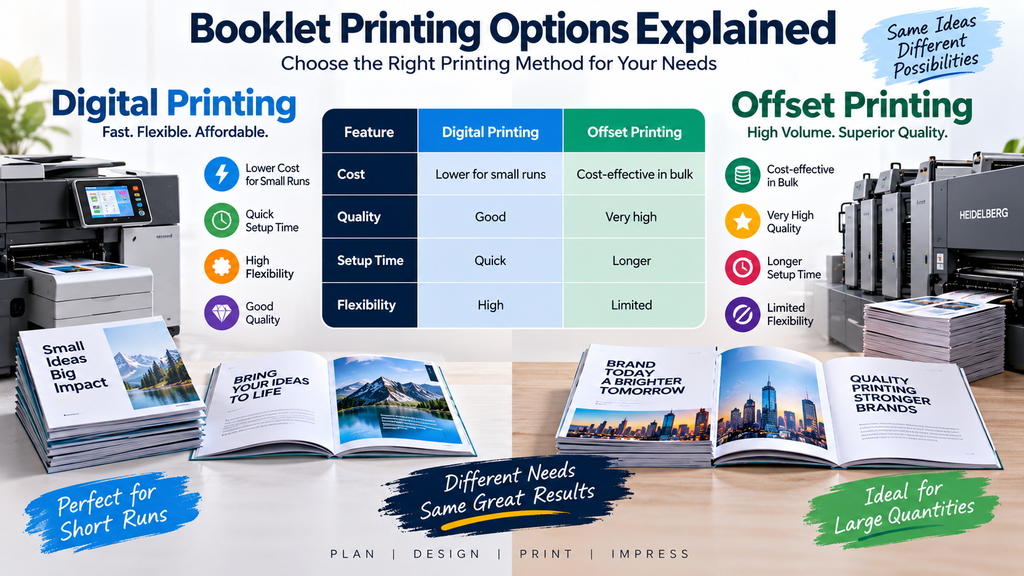
Printing plays a major role in the final appearance of a booklet. The choice of printing method, paper type, and binding style can significantly impact quality and cost.
Understanding your options helps you make informed decisions that align with your budget and expectations.
Digital vs Offset Printing
| Feature | Digital Printing | Offset Printing |
| Cost | Lower for small runs | Cost-effective in bulk |
| Quality | Good | Very high |
| Setup Time | Quick | Longer |
| Flexibility | High | Limited |
Digital printing is ideal for short runs and quick projects. Offset printing, on the other hand, is better for large quantities where consistent quality is essential.
Paper Types and Binding
Choosing the right paper enhances the overall look and feel of your booklet. Glossy paper works well for images, while matte paper offers a more subtle and professional finish.
Common binding options include:
- Saddle stitch
- Perfect binding
- Spiral binding
Each option has its advantages depending on the booklet’s purpose and page count.
Booklet vs Brochure: Key Differences
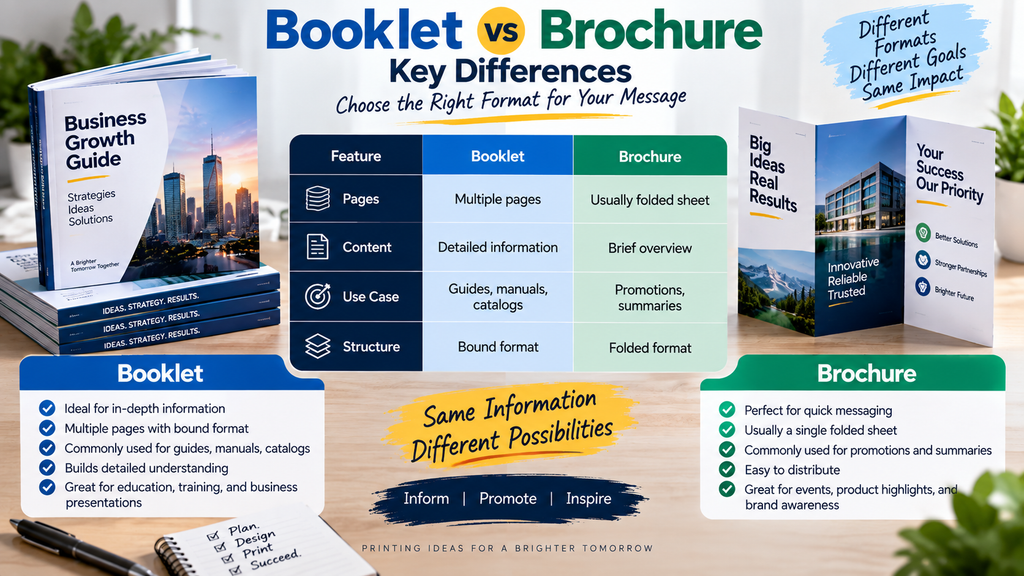
Many people confuse a booklet with a brochure, but they serve different purposes. Understanding the difference helps you choose the right format for your needs.
| Feature | Booklet | Brochure |
| Pages | Multiple pages | Usually folded sheet |
| Content | Detailed information | Brief overview |
| Use Case | Guides, manuals, catalogs | Promotions, summaries |
| Structure | Bound format | Folded format |
A booklet is better for in-depth content, while a brochure works for quick messaging. Choosing the right format ensures effective communication.
Best Uses of a Booklet in Marketing
A booklet is a powerful marketing tool because it allows businesses to provide detailed information in an organized way. It helps build trust by offering value to the reader instead of just promoting products.
Companies use booklets to showcase services, explain processes, or educate customers. This approach creates a stronger connection with the audience and improves brand perception.
Here are some effective uses:
- Product catalogs
- Company profiles
- Educational guides
- Event programs
Using a booklet strategically can enhance marketing efforts and improve customer engagement.
Common Mistakes to Avoid
Even a well-planned booklet can fail if common mistakes are not addressed. Avoiding these errors ensures your final product is professional and effective.
One major mistake is overcrowding pages with too much text. This makes the booklet difficult to read. Another issue is inconsistent design, which can confuse readers and reduce credibility.
Checklist to avoid mistakes:
- Keep content concise and clear
- Use consistent design elements
- Proofread carefully before printing
- Choose the right paper and binding
- Ensure high-quality images
Following this checklist helps create a polished and effective booklet.
Conclusion
A well-designed booklet is a powerful tool for communication, marketing, and education. It combines structured content with visual appeal to deliver information in an engaging way. From planning and design to printing and distribution, every step plays a crucial role in the final outcome.
By understanding the key elements and avoiding common mistakes, you can create a booklet that stands out and delivers real value. Whether for business or personal use, a professionally crafted booklet remains one of the most effective ways to present detailed information clearly and confidently.
FAQs
What is the ideal number of pages for a booklet?
The number of pages depends on your content, but most booklets range between 8 and 40 pages for readability and cost efficiency.
What software is best for booklet design?
Popular options include Adobe InDesign, Canva, and Microsoft Publisher, depending on your skill level and needs.
What is the best paper for booklet printing?
Glossy paper works well for images, while matte paper is better for text-heavy booklets.
How much does it cost to print a booklet?
Costs vary based on quantity, paper type, and printing method, with digital printing being cheaper for small runs.
Can a booklet be used for digital purposes?
Yes, many booklets are designed as PDFs for online sharing, making them accessible and cost-effective.
READ MORE: blooketplay
