

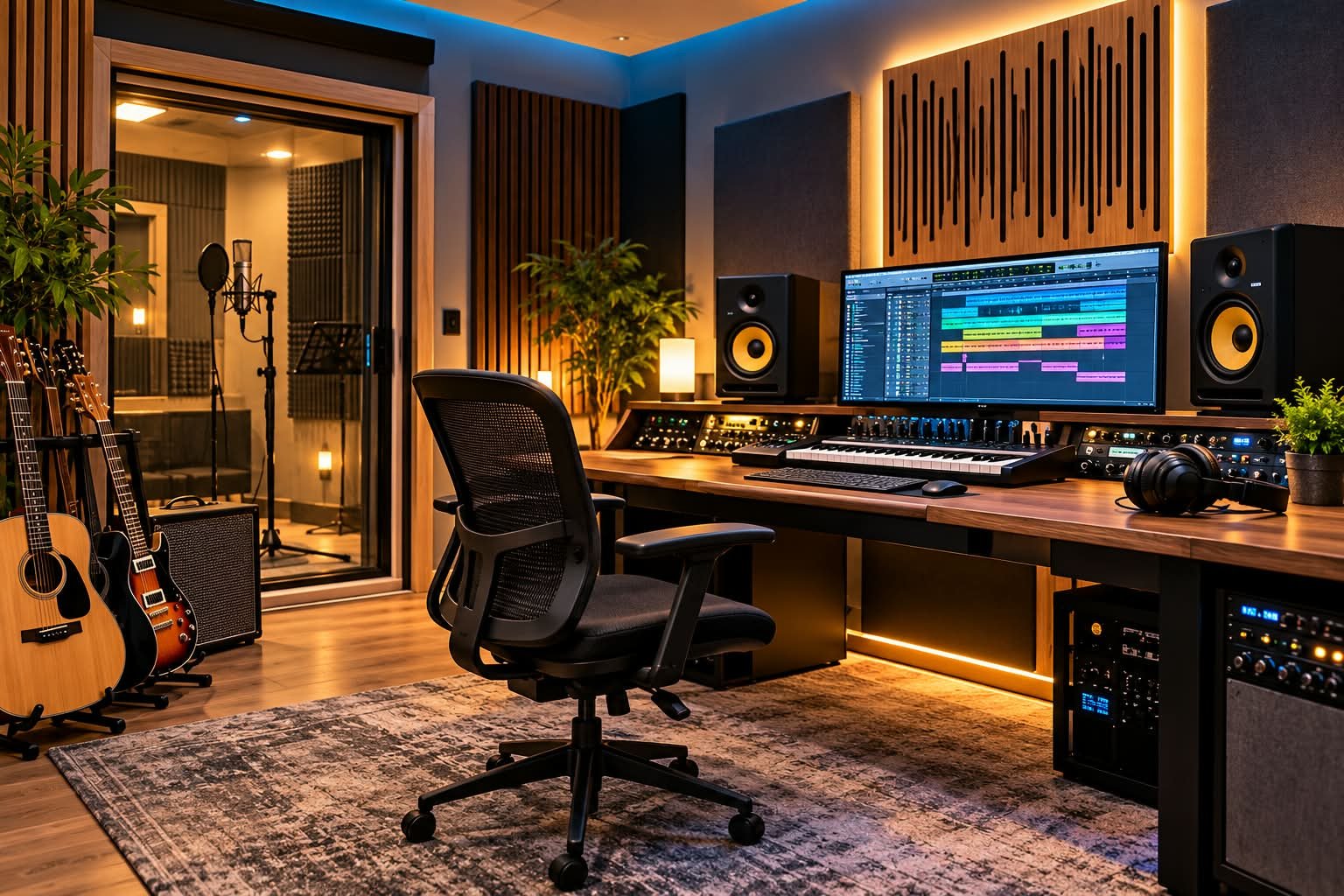
A music studio build is about creating a space that supports your music, delivers reliable sound and keeps unwanted noise under control. Whether you are planning a home production room, a professional recording studio or a dedicated band rehearsal space, the right design makes a real difference to how you work and what you hear. With careful planning, you can create a studio that suits your equipment, budget and creative goals without costly changes later.
What Does a Music Studio Build Involve?
A music studio build combines specialist construction, acoustic design, sound isolation and equipment planning to create a room suited to recording, producing, mixing or rehearsing music. The process can involve converting an existing room or developing a purpose-built studio from the ground up.
Unlike a standard room renovation, a music studio needs to perform acoustically as well as look good. Wall construction, room proportions, ventilation and speaker placement all influence the finished result.
The best approach starts with understanding how you intend to use the space. A bedroom production studio has different requirements from a live tracking room designed for drums, guitar amplifiers and full-band sessions.
Choosing the Right Type of Music Studio
Before planning construction, decide what you want your studio to do. This helps determine the room layout, acoustic specification, equipment requirements and level of sound isolation needed.
Home Music Production Studios
A home production studio is ideal for musicians, beatmakers and producers who want a dedicated space for writing, arranging and mixing tracks. It may fit into a spare bedroom, garage or converted outbuilding, depending on the available space and property constraints.
The focus should be on a practical workstation, suitable monitor placement, controlled room reflections and quiet operation. You do not necessarily need a large room, but you do need a layout that allows you to work comfortably and make dependable mixing decisions.
Professional Recording Studios
Professional recording studios often require a more complex arrangement, particularly when several people need to work together. A control room, live room and vocal booth can provide separate environments for recording performances and monitoring the results.
Sound isolation becomes especially important when recording loud instruments or operating in a commercial building. Careful planning also helps engineers communicate with performers, manage cables and equipment, and move efficiently between recording spaces.
Band Rehearsal and Live Tracking Rooms
Bands need enough room for musicians, instruments, amplifiers and monitoring equipment without making the space uncomfortable or difficult to manage. Drums and amplified instruments can generate substantial sound energy, so isolation requirements should reflect the intended playing levels.
Acoustic treatment also needs to suit the room’s purpose. A rehearsal room may benefit from a controlled but lively sound, while a tracking room might require different acoustic characteristics for vocals, drums and other instruments.
Why Acoustic Design Matters in a Music Studio Build
Acoustic design affects how accurately you hear music inside the studio. Even expensive speakers and recording equipment can produce misleading results when the room has excessive reflections, uneven bass response or poorly controlled resonances.
Room dimensions, speaker positioning and surface treatments should be considered together rather than as separate decisions. Getting these elements right helps you judge tonal balance, stereo imaging and low-frequency detail more consistently.
Sound Isolation vs Acoustic Treatment
These two elements are often confused, but they solve different problems.
Sound isolation reduces the amount of sound travelling between the studio and surrounding spaces. Depending on the building and required performance, this may involve decoupled walls, isolated ceilings, specialist doors and floating floors.
Acoustic treatment controls sound reflections within the room. Absorbers, bass traps and diffusers can help manage reverberation, low-frequency build-up and unwanted reflections.
A room can sound pleasant inside while still allowing considerable noise to escape. Likewise, a well-isolated room may have poor internal acoustics if its reflections and resonances have not been addressed.
Controlling Bass and Room Resonances
Low-frequency control is one of the more challenging aspects of a music studio build. Bass notes can become exaggerated in some positions and almost disappear in others because of room modes and standing waves.
The solution starts with suitable room proportions and thoughtful speaker placement. Bass trapping and other acoustic measures can then help improve consistency, although the right treatment depends on the room’s dimensions and construction.
This is particularly important for producers and mixing engineers who need to make decisions about kick drums, bass guitars and sub-bass frequencies.
Essential Features to Plan Before Construction
A successful studio needs more than acoustic panels and recording equipment. The underlying building design should support your daily workflow, comfort and future requirements.
Electrical Supply and Cable Management
Plan the location of power outlets, audio connections, network points and equipment racks before walls and floors are finished. A clear cable route reduces clutter and makes maintenance easier.
Electrical work should be specified and installed by suitably qualified professionals in line with applicable UK requirements. Equipment loads, lighting and any specialist power needs should be considered during the design stage.
Ventilation and Temperature Control
Recording equipment and people generate heat, while a tightly isolated room can become uncomfortable without effective ventilation. Fans and air-conditioning systems can also introduce noise and vibration if they are poorly selected or installed.
Plan for fresh air, temperature control and quiet operation from the beginning. Acoustic attenuation and suitable equipment placement can help balance ventilation performance with the need for a quiet recording environment.
Lighting and Interior Layout
Lighting affects both comfort and practicality, particularly during long production or recording sessions. Adjustable task lighting can help at the workstation, while softer ambient lighting may make the room more inviting.
Keep essential controls accessible and allow enough space for chairs, instrument stands, microphones and storage. A well-planned layout makes it easier to move between tasks without disrupting a session.
Monitoring and Equipment Integration
Your monitors, audio interface, microphones and other equipment should be considered during the design process. Speaker placement and room symmetry are especially important in a production room because they influence stereo imaging and frequency response.
Think about where instruments will be connected, how performers will communicate and whether your setup may expand. Planning for future equipment can prevent unnecessary alterations once the studio is complete.
How to Plan a Music Studio Build Step by Step
A structured approach helps keep the project practical and reduces the risk of expensive redesigns.
- Define your requirements. Decide whether the room will be used for music production, vocal recording, live tracking, rehearsal or a combination of activities.
- Assess the site. Review the available space, existing structure, neighbouring rooms, external noise and any property restrictions that could affect the build.
- Set a realistic budget. Include design, construction, isolation, acoustic treatment, ventilation, electrical work, finishes and equipment. Keep some contingency for unexpected building issues.
- Develop the studio design. Establish room dimensions, equipment positions, cable routes, lighting and the required acoustic specification before construction starts.
- Complete the construction and installation. Build the specified isolation systems, coordinate building services and install the acoustic treatment and technical infrastructure.
- Check the finished room. Assess sound isolation, room response, monitor positioning and practical operation before relying on the studio for important recording or mixing work.
Following these steps gives you a clearer understanding of the project before major costs are committed.
How Much Does a Music Studio Build Cost in the UK?
The cost of a music studio build depends on the size of the room, the existing building, the required sound isolation and the level of technical installation. A simple production room conversion will generally involve different costs from a multi-room professional recording facility.
There is no single price that applies to every project. A realistic estimate needs to account for the actual site and the performance you expect from the finished studio.
The main factors affecting cost include:
- Room size and construction: Larger spaces and substantial structural changes can increase labour and material costs.
- Sound isolation: Higher isolation requirements may need more complex wall, floor, ceiling and door assemblies.
- Acoustic treatment: The quantity and type of treatment depend on room dimensions, intended use and acoustic goals.
- Building services: Ventilation, electrical installations, lighting and climate control can add significant costs.
- Studio equipment: Speakers, microphones, mixing desks, interfaces and instruments may sit outside the construction budget.
- Design and testing: Specialist acoustic design and performance checks help ensure that the finished room meets the intended requirements.
Ask contractors for a detailed specification that distinguishes building work from acoustic systems and equipment. Comparing quotations on the same basis makes it easier to understand what each proposal includes.
Common Music Studio Build Mistakes to Avoid
Some studio problems are relatively easy to prevent during planning but expensive to correct after construction.
Treating Foam Panels as Soundproofing
Lightweight acoustic foam can reduce certain reflections, but it does not provide the mass, airtightness or structural decoupling needed for substantial sound isolation. If you need to prevent loud music from disturbing neighbours, the building assembly must be designed for that purpose.
Buying Equipment Before Planning the Room
It is tempting to invest in speakers, desks and microphones before finalising the layout. However, equipment dimensions, listening positions and cable requirements can affect how the space should be designed.
Plan the room around the equipment you actually need, leaving sensible space for future upgrades.
Ignoring Ventilation and Noise
A room that becomes too hot or contains audible fan noise can quickly become frustrating during recording sessions. Ventilation should be integrated into the acoustic design rather than treated as an afterthought.
Overlooking Planning and Building Requirements
Some projects may require planning permission, building regulations approval, landlord consent or other permissions, depending on the property and the proposed work. Requirements can vary across the UK, so check the relevant rules before starting construction.
Why Work With a Specialist Music Studio Builder?
A music studio combines several technical disciplines that need to work together. A general building contractor may be able to construct the room, but specialist studio experience helps ensure that isolation, room acoustics, ventilation and equipment layout are coordinated properly.
StudioBuild provides bespoke music studio design and construction services across the UK, covering production rooms, rehearsal spaces, live tracking rooms and professional monitoring environments.
Its approach brings together consultation, site assessment, acoustic specification, construction and installation. This can make project coordination simpler because the room’s acoustic requirements are considered alongside the practical details of the build.
For anyone planning a dedicated music space, working with a specialist from the outset can help identify constraints early and reduce the likelihood of expensive changes later.
You can explore the company’s services on its music studio build and design page and discuss the requirements of your own project.
Frequently Asked Questions
How long does a music studio build take?
A straightforward room conversion may take a few weeks, while a complex studio with multiple rooms and extensive sound isolation can take considerably longer. The final schedule depends on the design, construction work and site conditions.
Can I build a music studio in my home?
Yes, a spare room, garage or suitable outbuilding can potentially become a home music studio. The design needs to account for available space, noise transfer, ventilation and any relevant property or building requirements.
Do I need soundproofing for a home music studio?
You may need sound isolation if you record loud instruments, use amplified monitors or want to limit disturbance to other occupants and neighbours. The required construction depends on the noise level, building structure and surrounding environment.
What is the difference between a recording studio and a production studio?
A recording studio is generally designed to capture performances, often using live rooms and vocal booths. A production studio focuses more on writing, arranging, editing and mixing, although many modern studios combine both functions.
Is professional acoustic design worth the investment?
Professional acoustic design can help you avoid common problems with bass response, reflections and noise transfer. It is especially valuable when reliable monitoring, loud recording sessions or long-term studio use are important.
Build a Music Studio Around the Way You Work
A well-planned music studio build starts with understanding your creative goals and the practical demands of the space. Sound isolation, acoustic treatment, ventilation and equipment layout all influence how well the finished studio performs.
Whether you are upgrading a home production room or developing a professional recording facility, investing in the right design before construction can save time, prevent avoidable problems and create a more reliable working environment. With specialist support from a team such as StudioBuild, you can plan a bespoke studio that suits your music, your space and your long-term ambitions.
READ MORE: Blooketplay
