

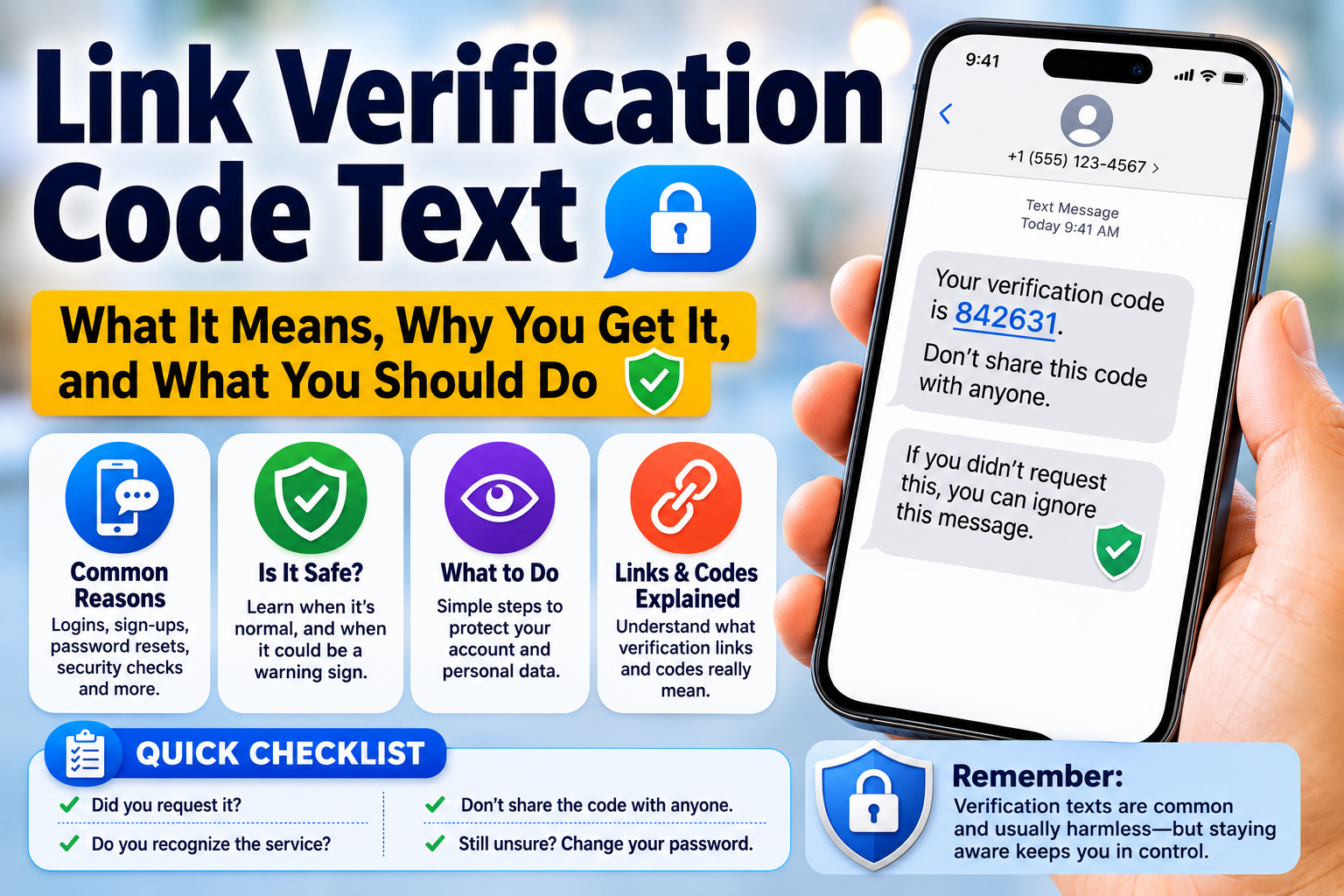
Your phone buzzes, and there it is: a short message with a string of digits, and maybe a link, asking you to confirm something you don’t remember starting. If you haven’t just tried to log in anywhere, that little message can feel genuinely unsettling. The good news: why am I getting a Link Verification Code Text I didn’t request usually has a boring, harmless explanation. Occasionally, though, it’s worth a second look. This guide walks through the common causes, when to ignore it, and when to actually take action.
The Boring, Harmless Explanations (Most Common)
Before assuming the worst, it’s worth knowing that unsolicited verification texts are extremely common and usually trace back to something mundane.
Someone Typed Your Number by Mistake
Phone numbers get recycled, mistyped, and confused constantly. If someone entering their own phone number for a login or sign-up fat-fingers a digit, your phone can end up receiving a code meant for a total stranger. This is genuinely one of the most common explanations and requires nothing from you beyond ignoring it.
An App or Site You Already Use Is Re-Verifying You
Some services periodically re-verify your phone number as a routine security check, especially after an app update, a password change elsewhere, or a security policy change on their end. If you have an account with the sender, this may simply be normal background verification rather than anything triggered by a login attempt.
Autofill or Background Processes Triggered It
On some devices, background app activity, autofill features, or even a browser session left open on another device can trigger a verification flow without you consciously “logging in” in the moment. This is more common than most people realize, especially across multiple synced devices.
A Family Member or Shared Device Triggered It
If you share a phone number, household internet connection, or a synced account setup with family members, a verification code intended for someone else’s login attempt on a shared service can sometimes land on your device.
When It’s Worth a Second Look
While most of these texts are harmless, a smaller number of cases genuinely warrant caution:
Someone Is Actually Trying to Access Your Account
If you get a verification code from a service you actually have an account with, and you did not initiate any login or password reset, this can mean someone else has your username or email and is actively attempting to log in. The verification step exists specifically to stop them — which is exactly why it’s important that you never share that code with anyone, regardless of what story they give you.
It Includes a Suspicious Link
Legitimate verification texts typically contain just a code, not a link asking you to “click here to confirm” or “verify your account now.” A text combining a code-like number with a link, especially from an unrecognized sender or shortened URL, is a common pattern in phishing (sometimes called “smishing” for SMS-based phishing). Avoid clicking any link in an unexpected verification text, even if it looks official.
You’re Receiving Repeated Codes in a Short Window
A single unexpected code is usually nothing. Multiple codes arriving in quick succession can indicate someone is actively attempting repeated login attempts using your phone number or email, which is a stronger signal that your account credentials may be compromised elsewhere.
Someone Contacts You Asking for the Code
This is the clearest red flag of all. If you receive a verification code and then get a call, text, or message from someone asking you to “read it back to confirm your identity,” this is a well-documented scam pattern. Legitimate services never need you to relay a verification code to a person — the code exists specifically to be entered by you, directly, on the service’s own login screen. No customer service agent, bank representative, or support technician has a legitimate reason to ask you to read a code aloud or forward it.
What to Do If You Get an Unexpected Code
- Don’t click any included link. If you want to check on the account in question, navigate to the service directly through your browser or app rather than tapping a link in the text.
- Don’t share the code with anyone, regardless of who contacts you or what urgency they create.
- Check if you actually have an account with the sender. If you don’t recognize the service at all, it’s very likely a wrong-number situation and can be safely ignored.
- If you do have an account, log in directly and check for suspicious activity. Use the app or official website, not the link in the text, and review recent login history if the service offers it.
- Change your password if anything looks off, and enable two-factor authentication if you haven’t already, since ongoing unexpected codes can be a sign your password is already known to someone else.
- Report and block clearly suspicious messages using your phone’s built-in spam-reporting tools, particularly if the text includes a link and doesn’t match the format of texts you’ve received from that service before.
Why This Happens More Than It Used To
Two-factor authentication (2FA) via text message has become extremely common as a security layer across banking, email, social media, and shopping accounts. That widespread adoption is generally a good thing for account security, but it also means the sheer volume of legitimate verification texts in circulation has grown — which in turn gives scammers more cover to blend fraudulent messages in among genuinely harmless ones. Understanding the difference between a routine, harmless code and a targeted attempt is more useful now than it’s ever been.
Frequently Asked Questions
Is it dangerous just to receive the text, without doing anything? No. Simply receiving an unsolicited verification code causes no harm on its own. Risk only enters the picture if you click a suspicious link, share the code, or interact with the message in ways that give someone else access.
Should I reply to a verification text to ask questions? No. Legitimate verification services don’t monitor replies to these automated texts, and replying (especially to an unknown or suspicious sender) can sometimes confirm to a scammer that your number is active and monitored.
What if I keep getting codes from the same service over and over? This is worth taking seriously. Log into that account directly through the official app or site, check for suspicious activity, and change your password if anything looks unfamiliar.
Can I stop unsolicited verification texts entirely? Not completely, since some will always stem from other people’s typos or unrelated account activity. But keeping your accounts secured with strong, unique passwords and only entering codes on official login screens minimizes any real risk from them.
Final Thoughts
An unexpected Link Verification Code Text is unsettling mostly because it’s ambiguous — you don’t immediately know if it’s a stranger’s typo or something that actually involves your accounts. Most of the time, it’s genuinely nothing: a wrong number, a routine re-verification, or background app activity. The moments that deserve real attention are consistent, though — never share a code with anyone who contacts you, never click a link inside one of these texts, and treat repeated or unexplained codes as a signal to check your account security directly rather than through the message itself.
