

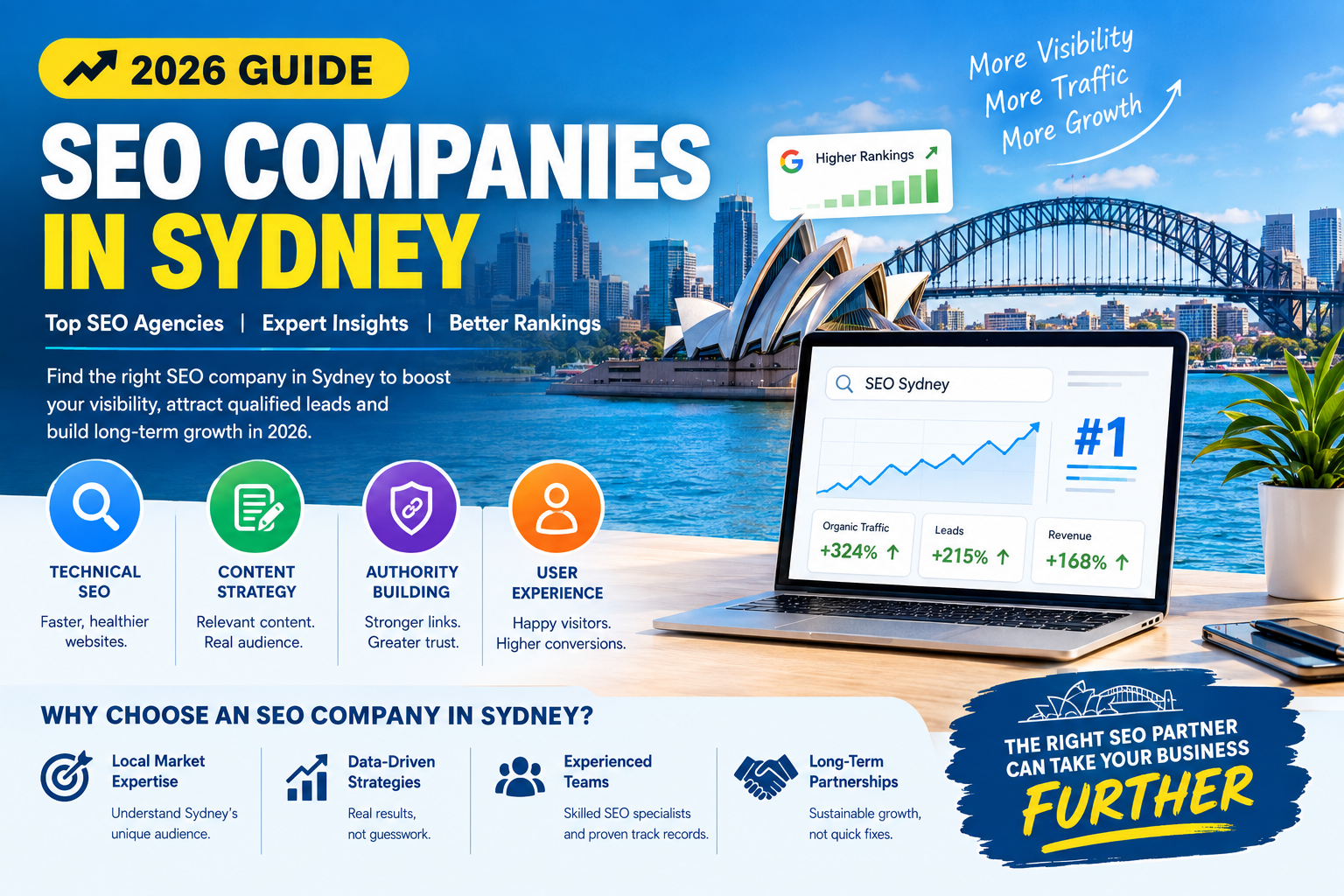
Sydney is one of the most competitive digital markets in Australia, and businesses are constantly fighting for visibility on search engines that now weigh technical performance, content relevance, authority, and user experience all at once. With that competition comes a crowded field of agencies claiming to be “Sydney’s top SEO company” — and here’s something worth knowing before you pick one: a large share of the “Top 10 SEO Companies in Sydney” lists circulating online are published by the agencies themselves, ranking their own company first. Learning how to choose an SEO Companies in Sydney means looking past those lists and evaluating agencies on criteria you can actually verify yourself.
Why “Top 10” Lists Deserve Skepticism
Search “best SEO companies in Sydney” and you’ll find dozens of near-identical rankings, several of which are hosted on an agency’s own website with that same agency sitting at number one. This isn’t necessarily dishonest in an outright sense — some genuinely believe in their own work — but it means these lists function more as marketing content than independent evaluation. Third-party review platforms with verified client feedback are a more useful starting point than a ranked list published by one of the companies being ranked, but even those should be read as one data point rather than a final verdict.
What Actually Matters When Choosing an Agency
1. Transparency About Methods and Timeline
A trustworthy agency explains what they’re actually going to do — technical fixes, content strategy, link-building approach — in specific enough terms that you could describe it back to someone else. Vague promises like “we’ll get you to page one fast” without explaining the mechanism behind that claim are a signal to dig deeper, not a reason for confidence.
2. No Guaranteed Rankings on Unrealistic Timelines
SEO results depend on competition, existing site authority, and ongoing algorithm changes — no reputable agency can guarantee a specific ranking position within a fixed short timeframe (30 days being a common red-flag promise). Agencies that lead with guarantees like this are often setting expectations they can’t control, or relying on tactics that produce short-term movement at the cost of long-term risk.
3. Contract Flexibility
Long lock-in contracts (12 months with vague deliverables) shift risk almost entirely onto the client. Agencies confident in their own results are generally more willing to offer month-to-month arrangements or clearly defined milestones, rather than requiring a long commitment upfront before showing meaningful progress.
4. White-Hat Link-Building Practices
Ask directly how the agency builds backlinks. Vague answers, or reluctance to explain the sourcing of links, can indicate reliance on low-quality link networks or paid link schemes — tactics that can produce short-term ranking gains but carry real risk of search engine penalties down the line.
5. Relevant Industry or Local Experience
An agency that has worked with businesses in your specific industry, or with a track record specifically in the Sydney or broader Australian market, tends to understand local search behavior, seasonal patterns, and competitive dynamics more effectively than one applying a generic global playbook.
6. Verifiable Case Studies and Client References
Ask for case studies with specifics — traffic changes, ranking movement, timeframes — rather than vague success language. Better still, ask to speak directly with a current or former client, since a genuine reference conversation reveals far more than a polished case study page.
7. Awareness of AI Search Visibility
As of 2026, a meaningful share of buyer research happens through AI-generated answers (ChatGPT, Perplexity, Google’s AI Overviews) rather than traditional search results alone. Agencies that only discuss classic ranking positions, without any strategy for how your business shows up in AI-generated answers, may be behind on where search behavior is actually heading.
Questions to Ask Before Signing
- What specific technical, content, and link-building work will you actually do for us?
- Can you walk me through a real case study, including the starting point and the timeframe?
- What happens if rankings don’t improve within the contract period?
- Is this a month-to-month arrangement, or a longer lock-in — and why?
- How do you source backlinks, specifically?
- How do you approach visibility in AI-generated search results, not just traditional rankings?
- Can I speak directly with a current client in a similar industry?
An agency that answers these clearly and specifically is a meaningfully different conversation than one that responds with marketing language and reroutes back to a sales pitch.
Red Flags That Show Up Often in This Market
- Guaranteed page-one rankings within a fixed, short timeframe
- Long contracts paired with vague, non-specific deliverables
- Refusal to explain link-building sources
- Pricing that’s dramatically below the market average for genuinely comprehensive SEO work, which often indicates outsourced, low-quality execution rather than a real bargain
- Self-published “top agency” rankings used as the primary evidence of credibility, rather than independently verifiable client outcomes
How to Use Third-Party Review Platforms Responsibly
Platforms that verify client reviews are a better starting point than self-published rankings, but they’re not perfect either — agencies can and do encourage reviews from satisfied clients while quieter dissatisfied clients simply don’t leave one. Treat review platforms as a way to build a shortlist worth investigating further, not as a final decision-making tool on their own. The direct reference conversation and the specificity of an agency’s answers to your own questions ultimately matter more than any published ranking.
Setting Realistic Expectations From the Start
Even with the right agency, meaningful organic SEO results typically take months to materialize, not weeks — genuine ranking improvement depends on search engines re-crawling and re-evaluating your site over time, alongside content and authority-building work that compounds gradually rather than instantly. An agency being upfront about this realistic timeline, rather than promising rapid results, is itself a positive signal rather than a disappointing one.
Frequently Asked Questions
Are “top 10 SEO companies in Sydney” lists reliable? Treat them with caution. Many are published by agencies themselves, often ranking their own company first, which makes them closer to marketing content than independent evaluation.
How long should an SEO contract be? Shorter, more flexible arrangements (month-to-month or clearly milestone-based) generally shift less risk onto the client than long lock-in contracts, especially early in a new agency relationship.
Should I be suspicious of very low SEO pricing? Pricing significantly below the market average for comprehensive SEO work often indicates outsourced or lower-quality execution, so it’s worth asking specifically what’s included before assuming it’s simply a good deal.
How quickly should I expect to see SEO results? Meaningful organic ranking improvement typically takes months rather than weeks. Agencies promising fast, guaranteed rankings on a short timeline should be evaluated carefully rather than taken at face value.
Final Thoughts
Choosing an SEO Companies in Sydney comes down to looking past the marketing — including the flood of self-published “top agency” rankings — and evaluating transparency, contract terms, link-building practices, and verifiable client outcomes directly. Ask specific questions, request real references, and be wary of guarantees that sound too fast or too certain. The agency that answers plainly, sets realistic timelines, and welcomes scrutiny is usually the one worth trusting with your search visibility.
