

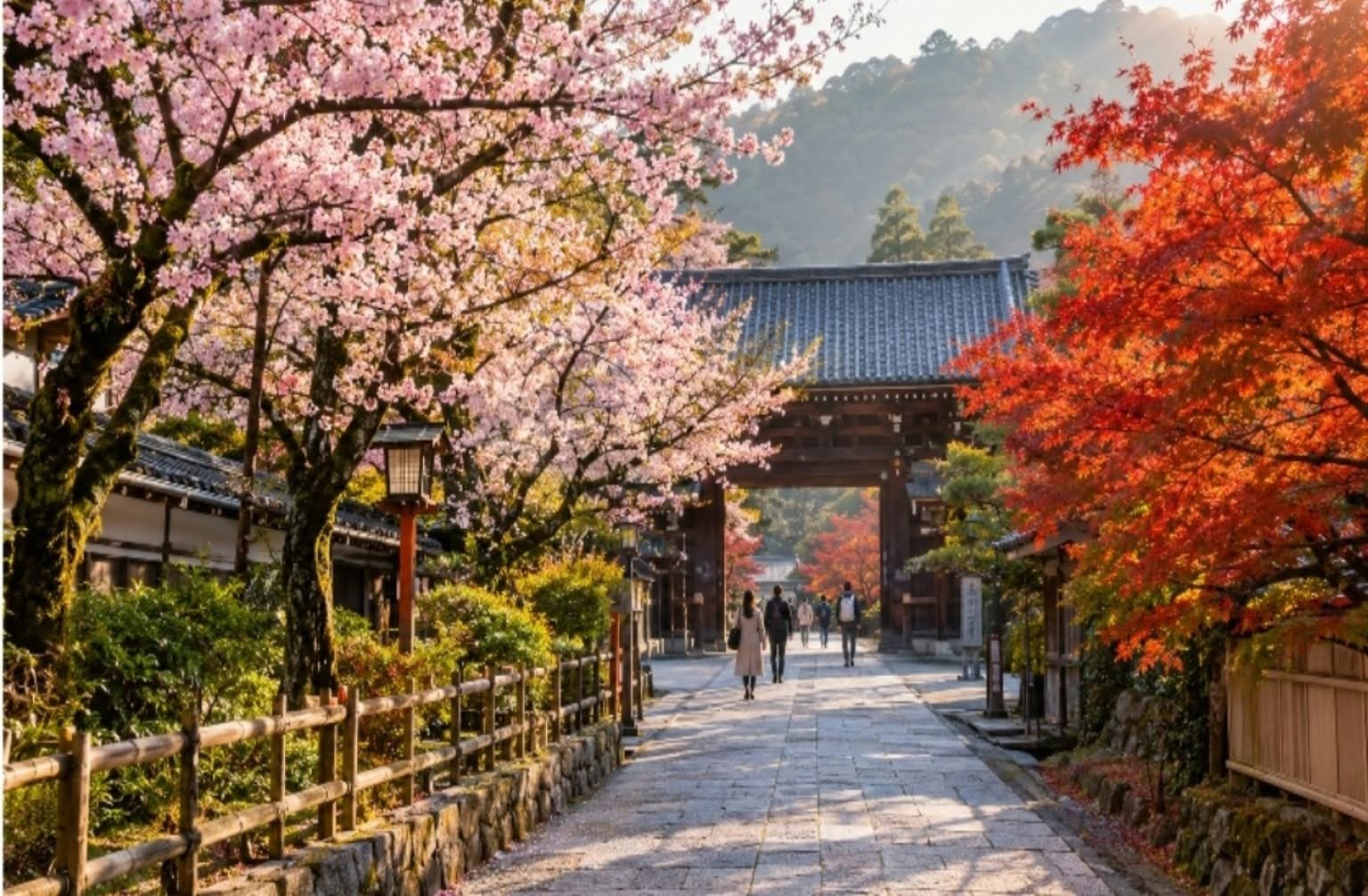
Japan is a country that looks completely different every few months. One season brings soft pink cherry blossoms, the next brings green mountains and loud summer festivals, then red maple leaves, and finally quiet snow. Because of this, the best time to visit Japan is not one fixed answer. It depends on what you want to see, how much you want to spend and how much crowding you can handle.
This guide from Noble Pen Magazine walks you through every season in simple terms, so you can match your trip to your own priorities. If you enjoy planning trips, you can also find more destination ideas in the travel section. By the end, you will know which months suit sightseeing, food, photography, hiking, skiing or a calm and budget-friendly holiday.
Quick Answer: When Should You Go?
For most travelers, the two best windows are spring (late March to May) and autumn (October to November). During these months the weather is mild, the skies are often clear, and the country shows off its two most famous natural displays: cherry blossoms in spring and red maple leaves in autumn.
The trade-off is that these are also the busiest and most expensive times. If you prefer fewer people and lower prices, early summer, late autumn and winter can be excellent choices as long as you pack for the weather.
Quick Facts at a Glance
| Season | Best For | Crowds | Costs |
| Spring (Mar to May) | Cherry blossoms, comfortable weather, city sightseeing | Very high | High |
| Summer (Jun to Aug) | Festivals, Hokkaido, climbing Mount Fuji, beaches | Moderate | Lower in June, higher in August |
| Autumn (Sep to Nov) | Fall colors, food, photography | High in Nov | High in Nov |
| Winter (Dec to Feb) | Skiing, snow festivals, hot springs, lower prices | Low (except holidays) | Lower in cities, higher in ski towns |
Spring in Japan (March to May)
Spring is the most famous time to visit, and for good reason. Cherry blossom season usually begins in late March in Tokyo and Kyoto, then slowly moves north through the country and reaches Hokkaido in early May. The south generally blooms one to two weeks earlier than the north, so you can follow the blossoms if you plan your route carefully.
Locals celebrate the season with hanami, which means gathering under the trees for picnics, snacks and drinks. Parks like Ueno in Tokyo, the Philosopher’s Path in Kyoto and Hirosaki Castle in the north become very popular during this time.
Temperatures during peak blossom are comfortable, with Tokyo and Kyoto often averaging around 19°C (66°F). Rainfall is usually lower than in summer, which makes spring a safe choice for first-time visitors.
Things to keep in mind:
- Cherry blossoms do not last long. Full bloom is often only about a week, and the whole season in one city lasts roughly two weeks. Weather can move the dates earlier or later each year, so check the official blossom forecast a few weeks before you fly.
- Hotels and flights get expensive, and popular tours sell out early. Booking several months ahead is wise.
- Golden Week, a cluster of national holidays from late April to early May, is the busiest domestic travel period of the year. Trains, hotels and attractions are packed, and prices rise. If you can, plan your trip just before or after it.
If you want spring weather without the blossom rush, May is a lovely month. The air is fresh, the greenery is bright and crowds thin out once Golden Week ends.
Summer in Japan (June to August)
Summer is hot and humid, but it has its own charm. It is also the season many travelers skip, which can work in your favor.
June is the start of the rainy season in much of the country, usually lasting until around mid-July. It does not rain all day, every day, but you should expect gray skies and showers. The upside is lower hotel prices and fewer tourists. Gardens, temples and hydrangea flowers look beautiful in the rain.
July and August bring strong heat and humidity, especially in Tokyo, Osaka and Kyoto. Still, this is the season of lively fireworks displays, traditional dances and local festivals. It is also the only time of year when most people can climb Mount Fuji, since the main hiking trails and mountain huts open only during the summer climbing season.
Hokkaido, the northern island, is at its best during summer. It stays cooler, and its lavender fields, wide roads and fresh seafood make it a great escape from the heat. Okinawa and other southern islands are popular for beaches, though you should keep typhoon season in mind.
Things to keep in mind:
- Late summer and early autumn are the main typhoon months. These storms can delay trains and flights, so build some flexibility into your plans and consider travel insurance.
- Mid-August includes the Obon holiday, when many Japanese families travel home, so transport can be busy.
- Carry water, wear light clothes, and plan indoor activities for the hottest part of the afternoon.
Autumn in Japan (September to November)
Many people say autumn is even better than spring. The weather turns dry and pleasant, the food is at its best, and the mountains and city parks fill with red, orange and gold leaves. The Japanese call the practice of viewing fall colors momijigari.
September is still warm and can have typhoons, so the real sweet spot starts in October. The colors appear first in the north and in high-altitude areas, then slowly move south. In general, the best time for fall foliage runs from mid-October to late November. In popular areas like Tokyo, Kyoto and Osaka, mid to late November is usually the peak, and Kyoto’s colors can linger into early December.
Unlike cherry blossoms, autumn colors last longer, which gives you more flexibility. You can spend several weeks enjoying them instead of rushing to catch a single week. Kyoto’s temples, Nikko’s hillsides and gardens such as Korakuen in Okayama are especially rewarding in this season.
Things to keep in mind:
- Kyoto in mid to late November is very crowded. Visit famous temples early in the morning to avoid the biggest groups.
- Like blossoms, fall colors depend on the weather. A warm autumn can delay the peak by several days, so check a foliage forecast before booking.
- Hotels can be as expensive as they are in spring, so book early.
Winter in Japan (December to February)
Winter is the quietest season for most of the country, apart from the New Year holidays, when many shops and restaurants close for a few days and travel is busy.
Big cities like Tokyo stay cold but are usually dry and sunny, with clear views of Mount Fuji on good days. This is a great time for hot springs, warm ramen and winter illuminations that light up streets and parks across the country.
Winter is also the best time for snow lovers. Hokkaido and the Japanese Alps are known for light, dry powder snow, and ski resorts operate from roughly December through March. Early February is also when snow and ice festivals take place, including the large winter festival in Sapporo, where giant snow sculptures fill the city.
Things to keep in mind:
- Hotel prices in big cities are often lower in January and February, but ski areas can be expensive and busy.
- Pack warm layers, waterproof boots and gloves, especially if you plan to visit snowy regions.
- Some rural attractions and mountain routes close in winter, so check opening dates before you go.
Best Time to Visit Japan Based on Your Goal
For cherry blossoms: Late March to early April, with later dates as you head north.
For autumn colors: Mid-October to late November, with mid to late November best for the Tokyo, Kyoto and Osaka route.
For fewer crowds and lower prices: Early June (before the rainy season ends), early December, and most of January and February outside ski areas.
For skiing: December to March, with excellent snow in Hokkaido and the Japanese Alps.
For hiking Mount Fuji: Summer, when the official climbing season is open.
For a first-time trip: Late March to April or late October to November give you the most comfortable weather and the classic Japan experience, as long as you book early.
Tips for Planning Your Trip
- Book early for peak seasons. Spring and autumn hotels fill up months ahead, and popular restaurants and experiences can be hard to find at the last minute.
- Check holiday dates. Golden Week, Obon and the New Year period make transport and hotels busier and more expensive.
- Stay flexible with blossom and foliage dates. Nature does not follow a calendar, so give yourself a few extra days if you can.
- Use trains smartly. Japan’s rail network is fast and reliable, but crowded trains are common during holidays. Reserve seats on long routes when you can.
- Pack for the season. Light layers in spring and autumn, breathable clothes and an umbrella in summer, and a proper coat in winter.
- Do not try to see everything. Fewer cities with more time in each is usually a better experience than rushing through many places.
Frequently Asked Questions
What is the cheapest time to visit Japan? Prices tend to be lowest in early June, after the spring holiday rush, and during the colder months of January and February, apart from ski regions. Flights and hotels both usually drop outside peak seasons.
Is it worth visiting Japan in the rainy season? Yes, if you are comfortable with some showers. You will get fewer crowds, lower prices and beautiful green scenery. Just carry a compact umbrella and keep some indoor plans ready.
How many days do I need for a first trip? Around 10 to 14 days is a comfortable length for a first visit, covering Tokyo, Kyoto and Osaka with a day trip or two. A shorter trip can still be great if you focus on one or two areas.
Is Japan too hot in summer? It can be very hot and humid, especially in July and August. If you do go, spend more time in cooler areas like Hokkaido or the mountains, and keep your afternoons light.
When is the best time to see Mount Fuji? Clear views are often easier in winter, while the climbing season is only open in summer. So the best time depends on whether you want to see the mountain or climb it.
Final Thoughts
There is no single perfect month to visit Japan, only the month that fits you best. Spring offers blossoms and mild weather, summer brings festivals and northern escapes, autumn delivers colors and great food, and winter brings snow, hot springs and calm cities. Decide what matters most to you, book early for busy periods, and keep your plans flexible. With a little preparation, any season can turn into a memorable trip.
Disclaimer: This article is written for general information only. Travel conditions, blossom and foliage dates, holiday schedules, prices, entry rules and weather can change from year to year. Please check official tourism websites, airlines and your local travel authorities for the latest details before you book or travel. Always consider travel insurance and plan according to your own needs and budget.
