

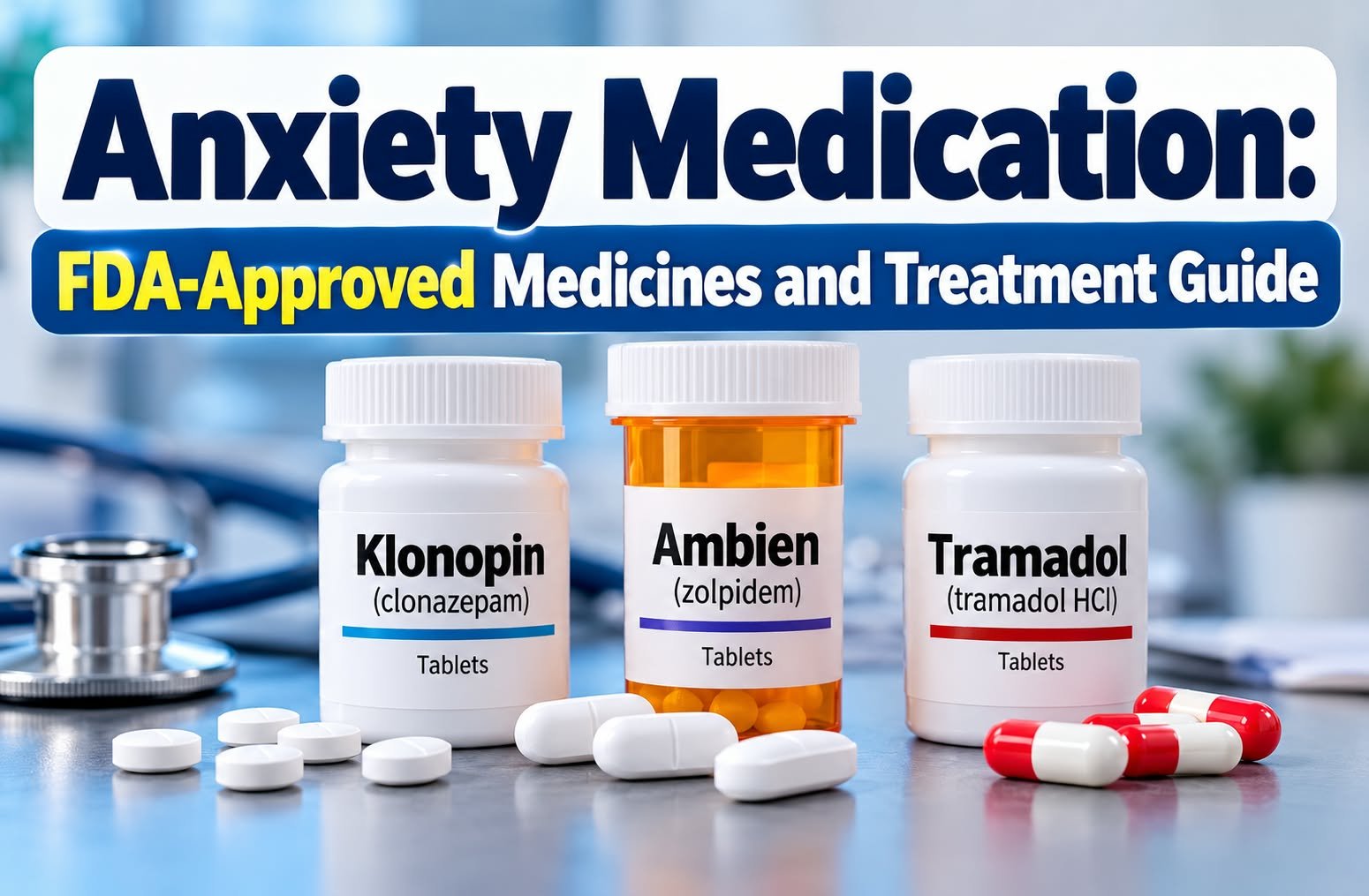
People in the US search this stuff all the time. Anxiety that won’t let up. Nights where sleep just refuses to show. Pain that sticks around longer than it should. Doctors pull out different prescriptions depending on the situation. Three that come up a lot are Klonopin, Ambien, and tramadol. Here’s the plain version of what most folks want to know.
How Does Klonopin Work
Klonopin is clonazepam. It’s a benzodiazepine the FDA cleared for panic disorder and certain seizures. Things like Lennox-Gastaut or absence seizures. Some doctors use it for other reasons too. How Does Klonopin Work?
Your brain already makes GABA. That’s the natural brake. Klonopin doesn’t invent calm out of thin air. It grabs the GABA-A receptors and helps GABA do its job better. Chloride ions move into the nerve cells and quiet them down. Anxiety eases. Muscles loosen. Seizures get less likely for the people who need that.
It can help. But it’s strong medicine. Most doctors keep the dose low and the time short. The body gets used to it fast. Stop suddenly and you can feel pretty rough. Sleepiness, dizziness, feeling off-balance — those happen a lot. Alcohol or other downers with it is a hard no. Take exactly what’s on the bottle. Don’t share it.
How Long Does Ambien Take to Work
Ambien is zolpidem. It’s for short-term insomnia. Mostly when you just can’t fall asleep. Regular tablets and the CR version that lasts longer.
Most people feel it starting within 15 to 30 minutes if they take it on an empty stomach. How Long Does Ambien Take to Work depends on factors such as timing and whether it is taken with food. Blood levels usually peak somewhere between 45 and 90 minutes. That’s why every label and every doctor says take it the second you’re ready to get into bed. Not while you’re still finishing something or checking your phone. You need a solid seven or eight hours ahead of you.
Food changes everything. A real meal — especially something heavy or greasy — can push that peak out to two or three hours and cut how much gets into your system. The under-the-tongue ones sometimes hit a little quicker. The extended-release starts about the same but keeps releasing later so you stay asleep.
It’s not a long-term pill. Bodies get used to it. Some people wake up foggy or do strange things in their sleep and don’t remember. Women often start on a lower dose. Your doctor will sort that part.
Tramadol side effects
Tramadol is for moderate to moderately severe pain when the usual options aren’t enough. It hits opioid receptors and also messes with serotonin and norepinephrine. That dual action helps the pain but brings the side effects with it.
A lot of people get nausea, constipation, dizziness, sleepiness, dry mouth, headache, or sweating. Especially when they first start or the dose goes up. Tramadol side effects can include some of these symptoms. Those can settle for some after a week or two. Water, fiber, and walking help the constipation. A little food with the dose can settle the stomach.
Bigger problems show up too. Breathing can slow down. More so at higher doses, in older people, or if alcohol, benzos, or sleep meds are also in the mix. Seizures can happen even at regular doses for some. Serotonin syndrome is another risk if you’re already on certain antidepressants. Agitation, racing heart, fever, stiff muscles, confusion. That’s emergency room territory.
The FDA put a strong warning on this one about addiction, abuse, breathing trouble, and overdose. Use it regularly and dependence can sneak up. Stopping all at once isn’t pleasant. Doctors check history carefully and keep an eye on things. Stick to the prescribed amount. Keep the bottle locked up.
These three handle different problems. Klonopin for anxiety and seizures. Ambien for falling asleep. Tramadol for pain. But they all work on the nervous system and come with real risks. In the US they’re prescription only for a reason. Getting them any other way is risky and illegal.
Tell your doctor every single thing you’re taking. Supplements too. Mention any past issues with meds or other health stuff. Age, liver, kidneys, other drugs — all of that changes how these act in your body. Follow-up visits matter so the dose can be adjusted or something else tried.
The non-pill stuff still counts. Therapy and exercise help a lot with anxiety. Same bedtime every night. Less phone before bed. Dark quiet room. Those make a real difference for sleep. Moving more, physical therapy, non-opioid options often come first for pain.
If anxiety, bad sleep, or pain is running the show, call the doctor. Someone who knows your history can say whether one of these fits, spell out the trade-offs, and stay on top of it. Good information plus actual medical care is still the safest way.
