
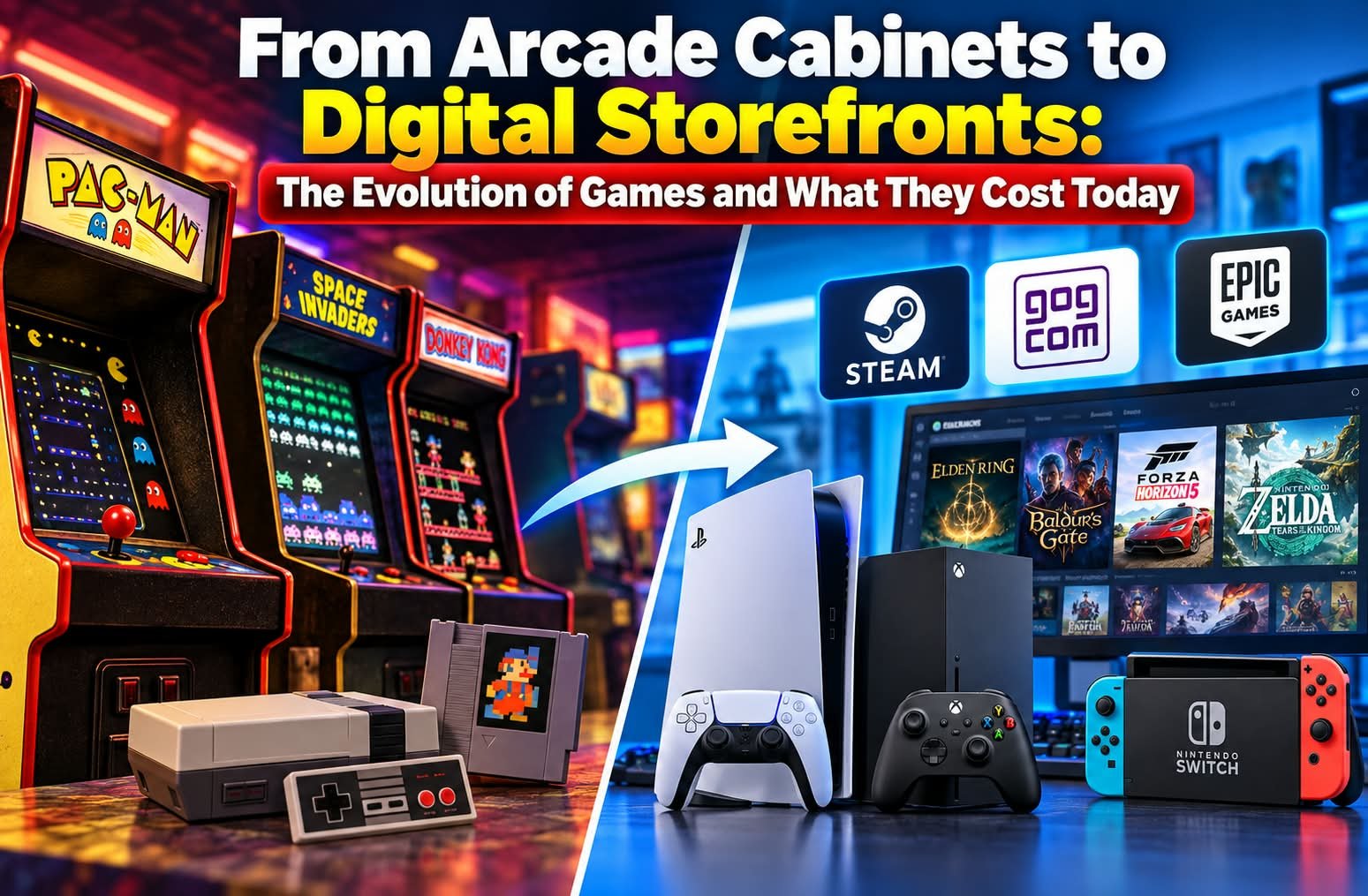
Video games have travelled a long way from coin operated machines in noisy halls to instant downloads on a laptop or phone. Along the way, the way we play, buy and share games has changed completely. This article looks at how gaming evolved, how players access games today, and how prices compare across PC, PlayStation, Xbox and Nintendo Switch, as well as the major PC stores Steam, GOG and Epic.
The Birth of Arcade Gaming
The story of modern entertainment software begins in the early 1970s, when arcade games first appeared in bars, malls and dedicated game rooms. Titles such as Pong, Space Invaders and Pac-Man turned a simple coin into a few minutes of competition, and they shaped the habits of an entire generation.
Their design rules were strict: easy to learn, hard to master, and short enough to keep players dropping in another quarter. Those principles still influence mobile and browser design today.
The Move to Home Consoles
By the late 1970s and 1980s, companies realised people wanted the same experience at home. The Atari 2600, the Nintendo Entertainment System and the Sega Master System brought living room gaming to millions of families.
Cartridges replaced coins, and games became longer, with stories, save systems and characters that players grew attached to. The 1990s and 2000s then added 3D graphics, optical discs, online multiplayer and eventually digital downloads, which changed how games were sold and priced.
The PC and the Digital Revolution
Personal computers offered something consoles could not: open hardware, mod communities and a huge variety of genres. Strategy games, role playing games and shooters thrived on PC. The real turning point, however, came in the mid 2000s, when digital distribution removed the need for physical discs.
Players could buy, download and update a game in minutes, and developers could reach a worldwide audience without a publisher in the middle. This shift also made seasonal sales, bundles and regional pricing normal parts of the market.
Instant Gaming in the Browser Era
Today, not every player wants a large download or an expensive device. Browser based gaming has grown quickly because it removes the barriers of installation, storage and hardware requirements.
Platforms such as Playze.io let people open a game in seconds, play casually on almost any device and move on without commitment. This model suits short sessions, younger audiences and anyone with a modest computer, and it reflects the same quick, accessible spirit that made the earliest coin machines so popular, only without the coin.
Game Pricing Comparison: Consoles
Price is one of the biggest factors when choosing where to play. For a new major release, the standard price on PlayStation 5 and Xbox Series consoles has generally been around $69.99, with some premium editions costing more. Nintendo Switch 2 titles typically range from about $69.99 to $79.99 for first party releases, while many older Switch games remain in the $29.99 to $59.99 range.
A few patterns are worth knowing:
- PlayStation: Games are often discounted during regular store sales, and older titles drop to $19.99 or less. PlayStation Plus adds a catalogue of games for a monthly or yearly fee.
- Xbox: Many Xbox published games are available through Game Pass, which can be cheaper than buying titles individually if you play several games a year.
- Nintendo Switch: First party games hold their value for a long time and are rarely discounted heavily, but physical copies are easy to resell or trade.
Prices can vary by region and edition, so always check the current listing before buying.
Game Pricing Comparison: PC Stores
PC players can buy from several stores, and the same game can cost different amounts depending on where you look.
Steam is the largest PC store. Publishers set their own prices, and many AAA games launch at $59.99 or $69.99. Steam is well known for large seasonal sales, wishlists and regional pricing, which often lowers costs in many countries. Older and indie games frequently fall to $5 to $15.
GOG focuses on DRM free games, meaning you own the installer without needing a launcher to run it. Prices are usually similar to Steam, though classic games are often cheaper, and the store runs regular discount events. Many players value the ability to keep their files permanently.
Epic Games Store is known for giving away free games every week and for occasional coupons that reduce prices further. Launch prices are usually comparable to Steam, but publishers sometimes offer exclusive discounts there.
Compared with consoles, PC games tend to drop in price faster, which makes patience a useful strategy.
Tips for Getting the Best Value
Whichever platform you choose, a few habits help your budget:
- Use wishlists and price alerts, so you buy during sales rather than at launch.
- Compare stores for the same title, as prices and bundles can differ.
- Consider subscriptions if you play many different games each year.
- Check regional pricing and refund policies before you pay.
- Try free and browser games first, to find genres you enjoy without spending anything.
Conclusion
Gaming has moved from coin slots to console cartridges, from physical discs to digital libraries, and now to instant browser play. Each stage made games more accessible, and each brought new pricing models. Consoles offer a simple, consistent experience at a standard launch price, while PC stores like Steam, GOG and Epic reward patient buyers with frequent discounts and free offers. By understanding how the industry evolved and comparing prices carefully, players can choose the platform that suits their budget, their taste and their time.
